Final Assessment

Final Self-Assessment:

  1. Andrew Glaros https://frostythumbdrive.car.blog/
  2. Total word count: 5466
  3. yes!
  4. I have revised all my blogs and posts since our last meeting.
  5. Yes!
  6. Great participation and I always showed up, but sometimes late.
  7. I think I got 7 in on time.
  8. I think I made 10 comments
  9. I have 30 words in my glossary with origin noted.
  10. Given the course requirements, what grade have you earned?
    1. 50% content I think I got all 50%.
    2. 10% mechanics the only item on the check list i don’t think i met was having blogs in on time. I think I earned 8%.
    3. 10% collaboration. I don’t think I had enough comments but me and my Obe checked in on each other. In regards to tutoring center, I’m going to pull a Dr. T (when you told us about your garden loophole on the lease) you say visit tutoring center but you don’t say for what subject. I went to the STEM tutoring center in between classes at ARC and can provide proof. therefore i think I earned a 8% in collaboration.
    4. Glossary is 10% and i think I earned all 10%.
    5. Participation is 20%. Aside from being late (one of many factors), I love to be involved in class and i think that showed. I think i deserve 16%.
    6. total 92%
  11. What i learned the most from this class is the importance of knowledge, foundation and truth. A lot of what is taught in this class I think we all know as humans but diving into these concepts together as a class was refreshing. A lot of the material that we covered I could relate to my own life. Tostoy’s definitions of art or Humes or Frankfurt idea of free will, Plato’s issues with art or Cliffords idea’s on morality all hold a universal message that makes me feel smart and strong when considering validity in their theories. And also learning about these ideas will hopefully help me get rid of some of the contradictions in my own life. Thanks for a good semester!

Frankfurt, Freedom of the Will and the Concept of a Person

Frankfurt’s definition of a person is quite an umbrella. He states the it has the ability to deny humans and include animals. He breaks down our wants into second and first order desires where a first order desire is something that would lead to immediate action and a second order desire is when “Someone has a desire of the second order either when he wants sim- ply to have a certain desire or when he wants a certain desire to be his will” (Journal of Philosophy, Inc.Freedom of the Will and the Concept of a PersonAuthor(s): Harry G. Frankfurt). To be a person one has to have second order desires, and to have freedom of will is to process the ability to purposely change what one wills. I used to be addicted to opioids, during my early stages of addiction I would’ve fallen under Frankfurt’s definition of a Wanton. I was ok with being an addict. But after some time of being a addicted and I remembering sitting in my little paradise and realizing that no amount of drugs would make me happy. So I changed my will to look for happiness in different places. I had second order desires like wanting want to be involved in school, wanting to go to shows and have friends. But I see how my first order desires held me back, as well as strained relationships.

I’m free? There are some cases where I have been able to change my will. But there are remaining cases where I have tried and failed so only time will tell if I am truly free.

count 268

hume memento

Leonard relies upon scribbled notes to connect him to his past. He says that eyewitness testimony is worthless: “Memory can change the shape of a room…” Is he right? Do you think our memories are more reliable than his notes? Hume says identity is just a habit we have. Do you think Hume would see Leonard’s condition as any different from our ow

Hume believes that memory is inherently deceiving. The process of remembering can be described as reaching into this bag and feel around for the right mental note and pulling it out. The note that we find is never one hundred percent visible so each time we recall our mental notes we have to fill in the gaps and make up for the sloppy handwriting with our imagination. Once the note has been drawn and interpreted we place the not back into our metaphorical bag. The note that we put back is not the original note however. It has the new details that we had to imagine to fill in the gaps. Now when we want to call upon this memory again we are not reading the original note; we are instead reading the modified note and each time we recall this memory our note becomes more mutated from the original memory.

Leonard notes are his only way to remember and act on his past thoughts and believes. He needs this for every little new task and thought process but Leonard does not think that its to his disadvantage. He would agree with Hume in that memory is always corruptible and that relying on it is a blunder. I disagree with Leonard, he can only write down what he believes will be useful later. In some cases we will observe something and find that something which we though was first meaningless is actually an important factor. Leonard would miss this every time. His notes may be more accurate but they are limited to what he finds important at the time of writing them.

I agree with Hume’s idea that our identity are merely habits. If you were to magically appear in a new world with new rules to adapt to, first your habits would change, then your thought process and then your identity. One example of this could be going to jail. People have to follow new rules and form new habits which can change their identity upon release. For some people they have to change their habits to be tough and mean to fit in and their new identity makes it hard for them to fit into society upon release. Or on the brighter side Malcolm X who could barely ready had to change his habits to deal with his border and low self esteem and by changing his habits he was able to change his identity while locked in a cell.

word count 412

Blog 6

Blog Prompt 6 (Due after the movie)

How does Existenz, the film, fit into Plato’s hierarchical scheme of reality? How does the game, Trancendenz fit? (Due Saturday after class).

In Plato’s hierarchy of reality there are different realms. The first realm is the wold of forms. In this world our five senses are useless and only critical thinking and a thirst of knowledge are valuable in this realm. It consists of ideas and forms of objects in the physical world which are considered to be perfect. For example, computers in the real world have lots of shapes and sizes but they are not made for every task; therefore the idea of a computer is more perfect than a physical computer because it is much more versatile and incorporates every physical form of a computer. The second realm is the world which we perceive in our waking lives. It is different than the first realm in that ideas and viewpoints are constantly shifting and that any object in this world will never be perfect but just an imitation of a form in the world of ideas the first realm.

The game inside the film Estinenz has a number of references and similarities to Plato’s realms of reality . The participants play bazaar roles and their environments, problems and view points are constantly changing. One minute they are in the woods and next in a fish factory its very quick and un-trust worthy. The characters are also dictated by physical lusts, like death, sexual innuendos and sometimes beak the fourth wall and make sure that their desire for lust is known to the audience. In this way they are in Plato’s view point falling victim to humanities predisposition for physical lusts and desires. and the constant shifting of setting makes us question how reliable senses are in that world. Anyone could be lying, you need background knowledge and logic when considering who and what to trust not desires and physical senses.

Would Plato like this world? I think not. This game does not bring people closer to reality. Plato would have sided with the realist and fought to keep the game out of society. There is an interesting parallel with the game and virtual reality today. I think Plato would not like VR’s use for some gaming because the purpose of a game is to teach a message. In cards we teach counting and lying, basketball and soccer we teach team work and trickery. But in some video games it becomes unclear what we are teaching thus the message is blurred. In the case of teaching if we can use technology to further emerge kids in learning i think Plato would approve. If technology provides for a higher capacity and more robust passage for ideas and knowledge to be passed the message can be better shared and possibly more clear.

.word count 448

Gardening as an art

Show an example of something you consider to be art. It can be any kind of art. Provide links or images as needed. Explain whether or not your example matches Tolstoy’s definition and whether or not you agree with his view of art. Apply each of the three conditions for infectiousness to your chosen work of art. As always, choose at least one quote from the text that applies to your topic.

Gardening can take many different forms and reflect many different life styles. We have the flower gardener who strives for asethic beauty and who often arranges and prunes their plants to produce the most visually pleasing result. We have the succulent gardener who also strives for asethic beauty but who has to spend significantly less effort to achieve said beauty. The cactus farmer who will plant seeds and wait sometimes a decade with growth rates at cm’s per year to get full sized cactus. We also have to food gardener; they grow and care for their garden for the promise of future food. They strive for beauty but a on more function and practical side of elegance.

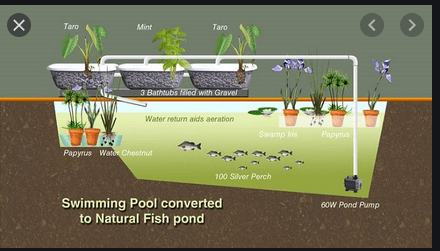
Gardening for food: permaculture

Gardening for aesthetics

farming

A quick review on Tolstoy’s definition of art.

An artist feels an emotion or a vision and tries to embed their feelings into their art.

They produce a piece of art that can be shared through means of communication or senses to others.

The artwork makes the audience feel the same feelings as the artist and infects them to want to experience it again or talk about it.

I think if you twist anything the right way it can be considered art but gardening doesn’t take much effort to make that connection. An artist can feel sad and decide to plant a mysterious flower or possibly arrange something that reminds them of their childhood. They can build an arrangement that draws attention and makes an memorable image. An innovated or creative set up can inspire others to strive for a similar garden which makes it an infectious art. For example, in my old neighborhood in the early 2000’s one of the neighbors had succulents and giant aloes before anyone else. Her off beat yard started a trend in our neighborhood and other people started trying aloes. I don’t agree with Tolstoy’s definition of art in regards to infectiousness. There could be a master rose gardener who lives in isolation in the mountains but who has dedicated their whole live to exploring the beauty of the rose. No one would have to see the rose garden for it to be considered art.

“#32. The clearness of expression assists infection because the receiver, who mingles in consciousness with the author, is the better satisfied the more clearly the feeling is transmitted, which, as it seems to him, he has long known and felt, and for which he has only now found expression.”

This quote speaks to me because it reminds me that my ideas should not only be brilliant but also easy to follow. In terms of gardening a person can increase clarity by changing arrangements, keeping plants healthy or using innovated gardening techniques.

word count 456

Create your own website, free on WordPress.com.Create your own website.
Start free